• Home
  • Download
    • Premium Version
    • Free Version
    • Downloadable
    • Link Url
      • Example Menu
      • Example Menu 1
  • Social
    • Facebook
    • Twitter
    • Googleplus
  • Features
    • Lifestyle
    • Sports Group
      • Category 1
      • Category 2
      • Category 3
      • Category 4
      • Category 5
    • Sub Menu 3
    • Sub Menu 4
  • Entertainment
  • Travel
  • Contact Us
UC History Blog

Department of History at the University of Cincinnati

Welcome Back Dr. McGee!
By: Alberto Jones 
Professor Holly McGee recently returned from seven months in South Africa where she led the History Department’s first study abroad trip to the continent and then stayed on to conduct research on her current book, a study of Black women's activism in South Africa during the Apartheid era.
The History Blog had the opportunity last week to sit down with Professor McGee and learn a little bit more about her experience:
History Blog: Where did you go in South Africa with your class?  Did you do your research in the same places?
Dr. Holly McGee: During our study abroad course, we spent a month traveling all over South Africa, with stops in Cape Town, Johannesburg, Durban, and Pietermaritzburg.  In July when I switched to working full-time on my manuscript project, I relocated to Lesotho for an additional 5 ½ months where I lived in a small town named Roma.
HB: Why South Africa?  And what was it that drew you to take students there? 
HM:  One of my areas of research is South African history, and I’m really excited to be able to open up international work and travel as a viable study option for UC students, and History majors, too, of course!
UC in South Africa
HB: What did you and the students do during your month together in South Africa?
HM: The study abroad course was an intensive historical, cultural, and linguistic immersion program.  Students were able to learn Zulu, live with local families, and get a real—rather than tourist-like—taste of South Africa.
HB: That sounds amazing.  What are some of your most memorable moments?
HM: I convinced a number of friends and family members to make a small financial donation, and prior to leaving Lesotho was able to purchase 43 pairs of shoes and 20 outfits for children on their first day of school.  It felt great making the drop-off at the local orphanage!
Nelson Mandela's house
HB: What was one of your most memorable moments with your students?
HM: One of my favorite moments from the trip were those when I realized students had really embraced a sense of international independence.  There were numerous occasions where students had the opportunity to get out and really experience South Africa without my direct supervision, and to know that they felt comfortable, safe, and secure enough to do so was really gratifying.  This particular image is of a day that two students—Shameka Neely and Cierra Carter—decided to take an independent, half-day trip to Soweto.  The ladies had a wonderful time visiting the city with a former resident, and even had an opportunity to visit Nelson Mandela’s home!
Africa Students
HB: What is something new that you learned about South African culture?
HM:  Having spent years travelling back and forth to South Africa, I’m always amazed at the diversity of the country – there are so many peoples speaking very different languages there living so close together.  It's the kind of thing that never fails to affect me.  That and fashion.  One man’s blanket is another man’s Sunday’s best...
HB: Lastly, what would you say to students thinking about a trip or a study abroad opportunity in Africa.  We usually hear about study tours in Europe, sometimes Asia or Central and South America, but Africa less so.  What’s your view?
HM: I would absolutely encourage everyone to travel to the continent of Africa.  After all, it's the cradle of civilization.
To learn more about Professor Holly McGee or the History Department, visit our webpage :http://www.artsci.uc.edu/departments/history/byDeptMembers.html?eid=mcgeehy&thecomp=uceprof
Wrote by UC History Department


Dr. Zalar Lead 18 Students to Paris, London, and Normandy


By: Alberto Jones
Dr. Zalar
In December students from UC stood on Omaha Beach in Normandy, France, where 71 years ago the D-Day invasion occurred.
The honors history course “A Global History of World War II” gave them this opportunity.
The course taught students about the war with emphases on its comprehensive impact not only on the battlefield but also on the intellectual, cultural, and political life of belligerent states.  Among the most important of these states were Germany, the Soviet Union, Japan and the United States.
To engage students the seminar included text-based discussions, theater and play acting, debates, art analysis, and other active learning exercises.
The course culminated with a study tour of London, Paris, and Normandy.  Here students enjoyed a more personal encounter with locations and artifacts to grasp a better understanding of them.
Dr. Jeff Zalar, assistant professor of Modern German History, taught the course.
According to Zalar, the seminar is important to teach, because The Second World War endures in the minds of contemporaries today.
“The war is alive.  Its impact is everywhere, including in popular entertainment. Understanding our world requires a serious academic introduction to the war and its consequences.”
Mikala Stokes
Mikala Stokes, a second-year History major, participated in the course.
“I have always been interested in WWII.  Both of my grandfathers served,” said Stokes.
Stokes initially found the seminar to be challenging, but later realized that the knowledge she attained would have an impact.
“From this course, I gained some awareness of mankind’s capacity for both stunning valor and abysmal destruction,” said Stokes.
The study tour was the first time Stokes travelled out of the country.  It was significant to her to walk on Omaha Beach.
“This was an awesome and emotional experience, because I got to retrace some of the steps that my grandfather took over 70 years ago.  He was part of the Normandy Invasion at the end of WWII,” said Stokes.
Student Group
Natalie Pfister, whose son Trenton also participated in the seminar, commended Dr. Zalar and the course in a letter to the Director of the University Honors Program.
“Dr. Zalar and this course is a shining example of honors education; a course which leaves a student with deep understanding of a subject,” said Pfister.
Based on her son’s experience, Pfister highly recommends the course.
“The combination of intellectual understanding, along with the experience of visiting the major sites gave our son insight and perspective that comes from high-caliber honors experiences,” said Pfister.
Debbie Brawn, Director of the University Honors Program, also commended Dr. Zalar on his teaching.
The vision of the University Honors Program is that students become global citizen-scholars who lead innovative efforts toward solving the world’s complex problems, according to Brawn.
“The transformational approach that Dr. Zalar takes to teaching brings this vision to life, offering a life-changing learning experience that challenges students to think about themselves as leaders in a global context,” said Brawn.
These praises led to a commendation from University President Santa J. Ono, too.
Wrote by UC History Department
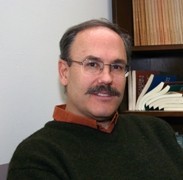
Dr. Isaac Campos-Costero, professor of Latin American History at the University of Cincinnati recently joined in the conversation "The History of Marijuana Culture" on the radio show "All Sides" with Ann Fisher. Please check it out. His contribution starts at the 37 minute mark

http://wosu.org/2012/allsides/history-marijuana-culture/
Wrote by UC History Department
"What Abu Bakr al-Baghdadi and ISIS Don't Know About Islamic History: The Use and Abuse of History in Modern Iraq and Beyond"

Robert Haug, University of Cincinnati

Date: Sat. Nov. 1, 2pm

Location: Cincinnati Public Library, Main Library South Building, Genealogy & Local History Program Space (3rd floor)

When the leader of the Islamic State in Iraq and Syria (ISIS), Abu Bakr al-Baghdadi, declared himself Caliph this past June, he was attempting to connect himself and the extremist, militant organization he leads to a millennia old Golden Age of Islamic Civilization when the Caliphs ruled a Sunni Muslim Empire that stretched, at its height, from Spain in the West to the frontiers of China and India in the East. Despite these attempts to legitimize his rule through evocations of the past, al-Baghdadi and ISIS’s actions before and after this declaration have had little resemblance to the actual Caliphs of the past. This is because al-Baghdadi’s vision of the past is shaped not by the actual study of history but by much more recent political and religious movements and ideologies. In this talk, Prof. Robert Haug of the University of Cincinnati History Department will discuss the use and abuse of early Islamic history in modern political discourse, what people from Abu Bakr al-Baghdadi to the American media gets wrong about that past, and the origins of these politicized versions of history. 


Wrote by UC History Department
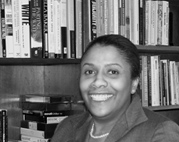
This year’s Von Rosenstiel Lecture will be delivered by Professor Mark Mazower, currently Ira 

D. Wallach Professor of History, Department Chair, and Director of the Heyman Center for the 

Humanities at Columbia University. 


Professor Mazower is one of the most accomplished historians working in the academy today. 

The author of numerous prize-winning books and a frequent commentator on the historical 

context shaping contemporary affairs, Professor Mazower’s work has long been focused on 

some of the defining issues of modern times: the making of empires and nations, the causes of 

war and peace, and the grand as well as anonymous work of governments and individuals to 

define and expand their rights as citizens and participants in an increasingly global society. For 

more on Professor Mazower’s many books and accomplishments, see his faculty web page at 

Columbia: http://history.columbia.edu/faculty/Mazower.html


Dr. Mark Mazower

Trained as a historian of modern Greece and the Balkans, Professor Mazower’s interests 

are far-reaching, and his current work places him very much at the forefront of trends in 

international history, including his latest book, Governing the World: The History of An Idea 

(Penguin, 2012), which offers a provocative interpretation of the ways in which individuals and 

nations have helped shape the dream and reality of global governance from the 19th

the present. 


During his visit to UC, Professor Mazower will deliver the Von Rosenstiel Lecture and host a 

special session devoted to discussing Governing the World. Both events are free and open to 

the public.


Thursday, February 27th

The Annual Von Rosenstiel Lecture

The Greek War for Independence in Global Perspective 

Reception to follow


Friday, February 28th, 9:30-11:30 AM in 417 TUC

Book Seminar

Governing the World: The History of an Idea 

4 PM at the Taft Research Center, Ground Floor, Edwards One


It is an honor for UC to host Professor Mazower for this visit. We are grateful to the Von 

Rosenstiel family and to the memory of Mr. Werner E. Von Rosenstiel for their generosity in 

creating the endowment that allows us to invite such eminent scholars to campus. The History 

Department also expresses thanks to the UC Classics, Political Science, and Judaic Studies

Departments, the UC European Studies Program, the Morgan Center for Human Rights at the 

College of Law, UC Amnesty International, the UC History Club, the Human Rights Taft Research 

Group, and the Global Studies Taft Research Group for the funding and assistance.

for more information concerning the Annual Von Rosenstiel Lecture and related events, please 

contact the Professor Ethan Katz of the UC History Department at ethan.katz@uc.edu\


2013-2014 Von Rosenstiel Lecture
Wrote by UC History Department
Mark Mazower, of Columbia University, will be at UC on Thursday and Friday, February 27-28. He will give a public lecture at 4 on Thursday entitled "The Greek War for Independence in Global Perspective" and this will take place in the Taft Research Center at One Edwards. There will also be a book seminar on his latest book Governing the World: The History of an Idea from 9:30-11:30 (after meeting with students at 9) on Friday. The book seminar will be in the VR room.  There will be copies of the book available soon for the book seminar; all three graduate lit seminars are reading the book this semester and will be participating in the seminar, which should make for a lively gathering. Ethan Katz and Steve Porter have arranged this visit.

Deborah Cohen, of Northwestern University, Sunday and Monday, March 2-3. Professor Maura O'Conner will have a reception at her home for Deborah on Sunday at 4 and she will participate in Professor Kwan and Professor O'Connor's combined seminar on Monday March 3 at 3:30 in 475 Langsam with History 3000 students who are reading her latest book Family Secrets: Shame and Privacy in Modern Britain. Earlier in the day, Jason Krupar, Director of Undergraduate Studies, and Professor O'Connor will organize a pizza lunch for undergrad majors and minors, grad students and faculty.

Kate Brown, from the University of Maryland, Baltimore County, will deliver a lecture on her new book Plutopia, on Tuesday March 4 from 2-3:15, room to be announced. Department Head Willard Sunderland has helped to arrange for this visit.

Vanessa Schwartz, of the University of Southern California, will deliver the plenary lecture at this year's annual QCC held in the Taft Research Center on Friday, 11 April. The lecture takes place at 12:30 and Schwartz's paper is entitled "Obsolescence, Technology and The Aesthetic of Expendability at the Dawn of the Jet Age."  The graduate students, especially Vanessa de los Reyes and the QCC committee, have arranged for this visit.
Wrote by UC History Department
Many of you in the UC History Community may find this play and discussion forum of particular interest as it explores racial and class change in an urban neighborhood that closely parallels similar changes in neighborhoods in Cincinnati both in the past and the present.

As many of you know, tumultuous neighborhood racial change occurred in Cincinnati and elsewhere during the 1950s and 1960s. Now, whites are beginning to move back into some of these neighborhoods, ones that have been largely black since the middle of last century. The best known of these is Over-the-Rhine, of course, but less well-known is that this is occurring in other neighborhoods in the city.

The play, Clybourne Park raises questions about how we might respond to such changes in our own neighborhoods and the forum sponsored by Housing Opportunities Made Equal and the U.C. Sociology Department provides a place to discuss these issues with Kathryne Gardette, a longtime Cincinnati activist and currently president of the Walnut Hills Redevelopment Foundation; Jeffrey Timberlake, a UC sociologist who is an expert on race and residence; and Timothy Douglas, the director of the play.

Playhouse in the Park is performing Clybourne Park  Jan. 18 - Feb. 16, 2014.  Called “ferociously smart” by The New York Times and “uproariously funny” by Entertainment Weekly, Clybourne Park is one of the most acclaimed plays of the decade — winner of the Pulitzer Prize and Tony Award for Best Play. The play is a spin-off of Lorraine Hansberry’s classic “A Raisin in the Sun.” In two acts set 50 years apart, the same Chicago bungalow sits at a volatile intersection of race and real estate, initially in 1959 with its sale to the neighborhood’s first black family and then in 2009 during the first wave of role-reversing gentrification.

Click here for the flyer for the performances.
Wrote by UC History Department
Please click here to read a recent piece from the Denver Post citing an interview with UC History Professor Isaac Campos on the legalization of marijuana in Colorado and other states over the last couple years.  Professor Campos provides an interesting view of the broader historical context informing the ongoing changes in US state law concerning marijuana.   http://www.denverpost.com/news/ci_24825864/marijuana-colorado-has-long-history-and-an-uncertain

Professor Campos is a well-regarded specialist in the history of modern Mexico whose recent book, Home Grown: Marijuana and the Origins of Mexico’s War on Drugs (Duke, 2012), was recognized last fall as the “Best Book” of 2012 by the New England Council on Latin American Studies.


Wrote by UC History Department

Dear UC History Community and Friends,

Feel like traveling to warmer climes during this deep freeze?

See the attached flyer and details below for information about an upcoming lecture by Professor Elizabeth Frierson on the Arabian Nights.  The lecture is being offered in conjunction with the UC Archive and Rare Books Library's speaker series "Fifty Minutes -- One Book" -- a series of talks by local experts highlighting interesting facts and stories about intriguing books in the library's collections.

Talk: A Thousand Nights and A Night: The Thousand and One Nights and the Middle East
Lecturer: Professor Elizabeth Frierson (UC History Department)
When: Thursday, January 16, 12:00-1:00 PM
Where: 814 Blegen Hall, UC Clifton Campus

For more information on Prof. Frierson's lecture and the speaker series, please contact:

Kevin Grace
Head and University Archivist
Archives & Rare Books Library
P.O. Box 210113
2602 McMicken Circle-805 Blegen Library
University of Cincinnati
Cincinnati, OH 45221-0113
513.556.1959
http://www.libraries.uc.edu/libraries/arb/archives/grace.html
https://twitter.com/gracekev
https://www.facebook.com/#!/kevin.grace5
Wrote by UC History Department
Please join students from Xavier University’s “Cincinnati and the Civil Rights Era” class at the Harriet Beecher Stowe House on December 7, 2013 at 1:00 p.m., as they present their projects on riots, freeways, women, neighborhoods and the politics of respectability.

The event is free to the general public but seating is very limited. Please call 513-751-0651 to reserve your space.

Ann Senefeld, majoring in Liberal Arts, explores the neighborhoods from where activists in the 1950s-1970s came and what it was about their upbringing in these neighborhoods that inspired them to become involved in the Civil Rights Movement.

Kelsey Witzgall, a senior History and French major, focuses on the roles of two Cincinnati women influential in the Civil Rights Movement, Marian Spencer and Betty Daniels Rosemond.

Jennifer Bakes is a senior in Xavier University’s Scholars program majoring in History and English. Her presentation examines the “politics of respectability” in the Civil Rights Movement: how did Civil Rights activists’ self-presentation communicate their dignity and status?

Kelly Schmidt is a senior community- Engaged Fellow with a double major in Honors Bachelor of Arts and History. Her digital presentation, the “The Cincinnati Race Riots of 1967 and 1968” describes the 1967 and 1968 race riots in Avondale and explores their causes and consequences.


Chuma Nnawulezi, is a junior Philosophy Politics and the Public major from Omaha Nebraska who has been researching urban development projects in Cincinnati, specifically the highway system. His video, “Cincinnati’s Freeway Fighters,” investigates the process of freeway construction and the consequences of highway placement for urban neighborhoods.
Wrote by UC History Department


Hamilton County Municipal Judge and UC History grad, Hon. Tyrone K. Yates comments on the legacy of John F. Kennedy on the 50th Anniversary of his assassination.


http://news.cincinnati.com/article/20131122/EDIT02/311220056

JFK assassination 50th anniversary
 President John F. Kennedy, shown acknowledging the cheers of the crowd during a 1963 visit to Ireland. 
Wrote by UC History Department
Artists' rendering of Lincoln's address
Short, Precise, Eloquent:

Today marks the 150th anniversary of Abraham Lincoln's delivery of the Gettysburg address. Read UC History’s Chris Phillips' reflections on these evocative words and their meaning for American history in today's Cincinnati Enquirer: http://news.cincinnati.com/article/20131119/EDIT/311190010/OPINION-Lincoln-s-Gettysburg-Address-changed-nation.
Professor Chris Phillips
Professor Phillips is a Lincoln scholar and a specialist in the history of the Civil War and Reconstruction. More specifically, Phillips' research focuses on the American South, with particular interest in the Border States, the slave states that did not secede during the American Civil War. His book “The Rivers Ran Backward: The Civil War on the Middle Border and the Making of American Regionalism” is scheduled to appear in 2015.
Wrote by UC History Department
UC History Professor Ethan Katz was recently quoted in an article on the Jewish and Israeli News website. "Holocaust Seen as ‘camouflage for Hate’ at Kristallnacht’s 75th anniversary" , written by Alina Dain Sharon, addresses the issues of remembrance of the Kristallnacht, while also arguing "remembrance of the atrocity does not address the problem of modern anti-Semitism, which is often masked as anti-Zionism." 
World Jewish Congress President Ronald S. Lauder addresses the Conference of European Rabbis commemoration of the 75th Anniversary of Kristallnacht in Berlin on Nov. 10. 
During Kristallnacht, the “Night of Broken Glass,” from Nov. 9-10, 1938, Nazi officials and German civilians killed more than 1,000 Jews and vandalized more than 7,000 businesses, a turning point in the Nazi era that foreshadowed the Holocaust atrocities to come. Dr. Katz provides important historical context for the article and the 75th anniversary of Kristallnacht in general. Katz says “before Kristallnacht many Jews had retained the hope that the anti-Semitism of the period would pass.” Adding to his historical comments of the event, Dr. Katz also connects it to modern issues, saying “attempts to decontextualize the Holocaust and turn it into a basis for political comparisons and attacks have become rampant—in American politics, in certain contexts in Europe, and in debates around the Israeli-Arab conflict. Without extreme care and precision, such references generally distort more than they reveal.” 

Professor Katz is a historian of modern Europe and the Mediterranean, with specialties in the history of modern France and its empire and modern Jewish history. He is currently completing a book on the history of Jewish-Muslim relations in France since World War I.
Wrote by UC History Department
UC History Professor Isaac Campos recently won the 2013 Best Book Prize from the New England Council of Latin American Studies. The book, Home Grown: Marijuana and the Origins of Mexico's War on Drugs, has also been awarded an Honorable Mention for 2013 Bryce Wood Book Award from the Latin American Studies Association. For more on Isaac's fascinating book, click here! 

Congratulations Isaac!
Wrote by UC History Department
Professor Nikki Taylor


A quick heads-up to let you know of some of our historians in the news these days! 

African-American history expert, Professor Nikki Taylor, recently appeared in a new television documentary hosted by Henry Louis Gates, Jr., The African Americans: Many Rivers to Cross, which debuted on PBS in October.   In The Age of Slavery, episode 2 of the documentary, Prof. Taylor is featured in a riveting segment focused on the compelling and tragic story of Margaret Garner, a runaway slave who, after her capture, murdered her own daughter rather than allow her to be forced back into a life of slavery.   For more on the documentary, see the web site, which allows you to view a number of the episodes (including episode 2 – look to about minute 45 for the segment featuring Prof. Taylor).  On the site, you’ll also discover a trove of fascinating details on the African-American experience in our country. http://www.pbs.org/wnet/african-americans-many-rivers-to-cross/

Interested in the Civil War during this centennial year?  Follow our own Professor Chris Phillips who is blogging on the history of the war for the New York Times.  His most recent post on the Times blog Disunion focuses on the still little-known history of the war in the west.  Click here to read more: http://opinionator.blogs.nytimes.com/2013/10/28/the-wicked-war-in-the-west/?_r=0
Wrote by UC History Department
UC History Professor Kate Sorrels will be giving a talk at the Hebrew Union College-Jewish Institute of Religion this coming Monday, November 4 at 12:40 on the 3rd floor of the American Jewish Archives Building. Professor Sorrels' talk is entitled "The Aristocracy of the Future: A Catholic-Jewish Utopia." Spread the word among interested friends, colleagues and students! 


Professor Kate Sorrels

Below is a schedule for the academic year of the HUC-JIR Open History Seminar of which Kate's talk is a part.

HUC-JIR OPEN HISTORY SEMINAR
(All are welcome to attend)

Schedule for the Academic year 2013/2014

FALL SEMESTER
Monday, October 21 Leong Seow "Jewish, Christian, and Muslim Commentary on the Book of Job"
12:40; AJA, 3rd floor 

Monday, November 4 Kate Sorrels "The Aristocracy of the Future: A Catholic-Jewish Utopia"
12:40; AJA, 3rd floor

Monday December 9 Michael Meyer "Image and Self-Image of the Modern Rabbi"
12:40; AJA, 3rd floor

SPRING SEMESTER
Monday, February 3 Jason Kalman "The Rabbinic Use of Attribution as an Exegetical Tool of Authorship"
12:40; AJA, 3rd floor  

Monday, March 3 Shaul Magid "Hasidism Incarnate: Hasidism and the  Christianization of Modern Judaism"
12:40; AJA, 3rd floor

Monday, April 7 Ari Finkelstein "Emperor Julian's Jews between Christians and Hellenes"
12:40; AJA, 3rd floor
Wrote by UC History Department
Maurice Adkins, a first year PhD student here at UC, has had a book review, "The Black Revolution on Campus", published in The Journal of Pan African Studies, vol. 6, no. 4, September 2013. He reviews The Black Revolution on Campus (University of California Press, 2012) by Martha Biondi, Associate Professor of African American Studies and History at Northwestern University. The book examines Black student activism in the 1960s and 1970s, its consequences, including the creation of Black Studies departments at universities around the country, and the current state and future prospects of such programs. 

Congratulations Maurice!
Wrote by UC History Department
HIST 3075: Urban African American History in the 20th Century
MWF 12:20-1:15
The course examines the forces, events, and demographic movements that shaped the development of racially isolated, low-income African American communities in American cities in the 20th century, starting in the 19th century and continuing through the last 20 to 30 years of 20th century, with attention to trends in race, residence, and employment.  It will look at the interaction between black efforts for self-determination, public policy choices at the local, state, and federal levels, and the actions of private individuals and organizations, all of which helped to shape the residential and economic environments experienced by urban African Americans.

HIST 6010: Public History Practicum

This course offers a practical orientation to and exploration of various fields encompassed under the rubric "public history," approached through specific team projects in conjunction with local organizations. Students will develop a museum exhibit, short publication, or other historical product examining an aspect of Cincinnati history with a view to the end product being available to the general public or to be turned over to a museum or other organization to expand into a professionally finished product.
Wrote by UC History Department
HIST 1099 001: Pregnancy, Birth, and Health: Sociological and Historical Perspectives on Reproduction
T 2:00-4:40 PM
This UC Forward Freshman Seminar will integrate historical and sociological readings on women's health with community action through service learning. Consistent with the aims of Medical Humanities, students will study the historical, social, and political issues surrounding reproductive issues - namely, childbirth, pregnancy, midwifery, prematurity, pregnancy loss and infant mortality, adoption, abortion, infertility, and birth control. We will pay special attention to differences of gender, race, and class. Students will be invited to reflect on course material through in-class exercises and assignments that develop writing skills and critical thinking. In addition, in order to fulfill the service-learning component, students will work in groups to build strategies and provide evidence-based resources for local Cincinnati advocacy organizations.

HIST 1099 002: Cold War and Atomic Tourism
MWF 1:25-2:20 PM
This seminar course will consider the establishment of the American Cold War nuclear weapons complex, the cultural, economic, environmental, and political ramifications of building this arsenal, and the recent efforts to memorialize and preserve the history of the complex. The class will specifically consider the nuclear weapons sites in the Ohio River Valley and the wide array of efforts to either save historical sites or to erase them from public memory.

HIST 1099 003: Gender and Politics in the “New” South Africa
TR 11:00 AM-12:20 PM

This course will review the place of women in the social, cultural, and political development of South Africa during the twentieth century.  In addition to learning the major events in South African history and why they continue to be important in the lives of South African women today, we will consider aspects of the post-1994 society that should cause us to question the extent of “change” in the nation following Apartheid.  This course is predominantly concerned with whether or not women have unique social and political needs in the “new” South Africa, and how/if those needs are being met in contemporary society. 
Wrote by UC History Department
The "History Out There" Speaker Series welcomes...Greg McCoy, Senior Archivist at the Procter & Gamble Heritage & Archives Center. Please join us on Wednesday, November 6, 2013, from 1:00-3:30pm in the Von Rosenstiel Reading Room in the Department of History for a conversation about the growth and development of the P&G Archives, and the work of corporate archivists within that process.

Greg McCoy will also share his "unorthodox" career track from a History and Communications major to his current position at P&G, so if you're interested in learning about yet another vocational possibility a history degree affords...we'll look forward to seeing you on November 6!
Wrote by UC History Department
Newer Posts Older Posts Home

WELCOME TO UC HISTORY BLOG

Welcome reader, here you will find cover stories and images over historian lovers and contributors surrounding the University of Cincinnati.

LATEST POSTS

  • Hamilton Avenue Road to Freedom Living History Tour
  • Cincinnati Remembers WWI
  • Kate Sorrels to Give Talk at the Hebrew Union College-Jewish Institute of Religion

Blog Archive

  • ▼  2016 (2)
    • ▼  September (2)
      • Welcome Back Dr. McGee!
      • Dr. Zalar Lead 18 Students to Paris, London, and N...
  • ►  2014 (7)
    • ►  November (1)
    • ►  October (1)
    • ►  February (1)
    • ►  January (4)
  • ►  2013 (34)
    • ►  December (1)
    • ►  November (5)
    • ►  October (9)
    • ►  September (5)
    • ►  August (2)
    • ►  July (2)
    • ►  June (4)
    • ►  April (2)
    • ►  March (3)
    • ►  February (1)

Links

  • UC Department of History
  • News and Upcoming Events
  • Newsletters
  • Faculty and Staff
  • Seminar Series
  • Graduate Programs
  • Undergraduate Programs
  • Giving
  • UC History on Facebook
  • UC History on Twitter

Copyright © 2016 UC History Blog. Designed by OddThemes & Blogger Templates